
For Development Partners
For Development Partners
Why an operator belongs at the table during design, not at delivery.
Where we fit
The hardest thing to find in a development deal is no longer the capital.
Demand in senior housing is set by demographics, and institutional capital is raising its allocation rather than cutting it. What is scarce is a proven operator with capacity. That is the position we are built to fill.
The operator is a credit factor
Lenders and LP capital partners underwrite the operator now.
Senior housing lenders and LP capital evaluate the strength and track record of the operating partner, and the structure of the owner and operator agreement, as core credit factors alongside cash flow and occupancy. Institutional equity screens for operators with regional density, and most established regional operators already have capital relationships.
The practical consequence: a developer who approaches a lender with a committed, proven operator is presenting a materially different credit than one who plans to select a manager after the design is fixed.
Four parties, one question.
A development deal has four parties: the developer, the operator, the LP capital, and the lender. The developer brings the deal and stands behind the guarantees. When the lender and the LP capital want to know who will deliver the projected net operating income, they are looking at the operator. The most expensive finishes in the world do not make a building financeable. The NOI attached to it does.
The design problem
Buildings that are hard to operate are usually hard for reasons decided early.
A unit mix that will not fill. Circulation that forces a staffing pattern nobody budgeted for. A Memory Care neighborhood sized to a market study rather than to a census. A fill curve in the pro forma that no operator has ever stood behind.
None of these can be fixed after the building opens. They get absorbed for thirty years, and they show up as an operating problem long after the decision that caused them.
What we contribute
What we bring, phase by phase.
- Site and market diligence
- Before land closes we pressure test the market: qualified household depth, referral density, competitor occupancy, and the visible pipeline. The same list a lender will run later, done early enough to change the decision.
- Program and unit mix
- The mix of Independent Living, Assisted Living, and Memory Care while the plan can still change, delivered to the architect as a written program: unit mix, unit sizes benchmarked against recently built comparable communities, parking, and efficiency targets. Each environment supplies the next, and buildings designed without that in mind fill once and then churn.
- A fill curve you can underwrite
- Built from lease ups we have actually run, not from a market study. If our name is on the pro forma, it is because we believe the number.
- Design for operations
- Labor is the largest expense a building will ever carry, and it is set by circulation, adjacencies, and back of house decisions. We design for it while it is still a drawing.
- Lease up execution
- A sales center and a marketing team in place six to twelve months before doors open, pre leasing off renderings.
- Reporting your capital will use
- Monthly owner reporting built for institutional readers: census, labor, and margin trend with early warnings in front. Reporting is what turns one deal into a repeat relationship.
- Commitment before close
- We come in on the front end and take a position, carrying risk alongside you rather than arriving as a hired manager at certificate of occupancy.
And one commitment that sits underneath all of it. We project NOI before a shovel goes in the ground, and we hit it when the building is built.
The boundary
We are not the developer. But we are in the room.
Development risk is yours. We do not hold the contract, run the schedule, or manage the municipal process. Not because we could not, but because our expertise is operations and that is where our time belongs. Blurring that line creates exposure for everyone else in the capital stack.
Where we show up is where senior living expertise changes the outcome. We have input on the design team and the general contractor. We are at the design table while the plan can still move. And we are at the entitlement hearing, because a council hears something different from the operator who will run the building in their jurisdiction than it hears from a consultant. Senior living is a low impact use and a hard one to argue against, and that argument lands better in our voice than in yours. We do not run the municipal process, but we are a party to it.
We are not passive until certificate of occupancy. We are just not the developer.
Why now
The math on building has changed.
Senior housing occupancy is at a twenty year high and still climbing, while construction has fallen to its lowest level since 2012. Industry projections put the national shortfall at several hundred thousand units by 2030, against a delivery pace running near a third of what would be required. A building that breaks ground now opens into the thinnest competitive pipeline in a generation.
Two other things run the same direction. Weakness in multifamily has freed up sites that were spoken for. And senior living clears entitlement more easily than almost any other use, because it is low impact, low traffic, and hard for a municipality to argue against.
Underneath it is the demand curve this business has been pointing at for twenty years, which has now arrived. The first boomers reached eighty in 2026, and the last of them will reach the average move in age of eighty two in 2046. A twenty year arrival window, and it has started.
Track record
Two projects, fully told.
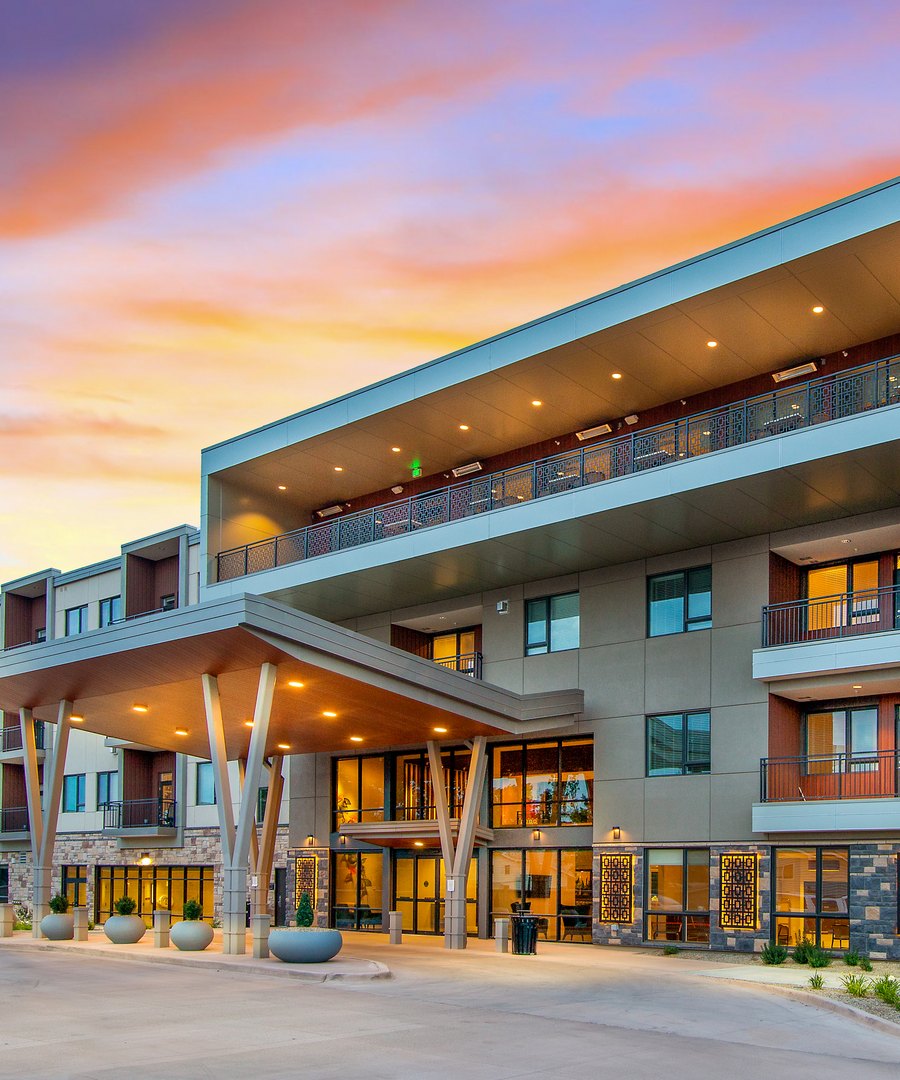
Hilltop Reserve, Denver
- The project
- 205 units. 124 Independent Living, 56 Assisted Living, 25 Memory Care. The largest community in the portfolio, the first senior living community in Colorado to achieve LEED Gold certification, and the largest LEED Gold certified senior living community in the country.
- What it took
- A development budget of approximately $100 million, capitalized in September 2019. The building went up through the pandemic and opened into the hardest operating environment the industry has seen.
- What happened
- The community runs above 95 percent occupied today, and it appeared on the cover of the NIC Investment Guide.
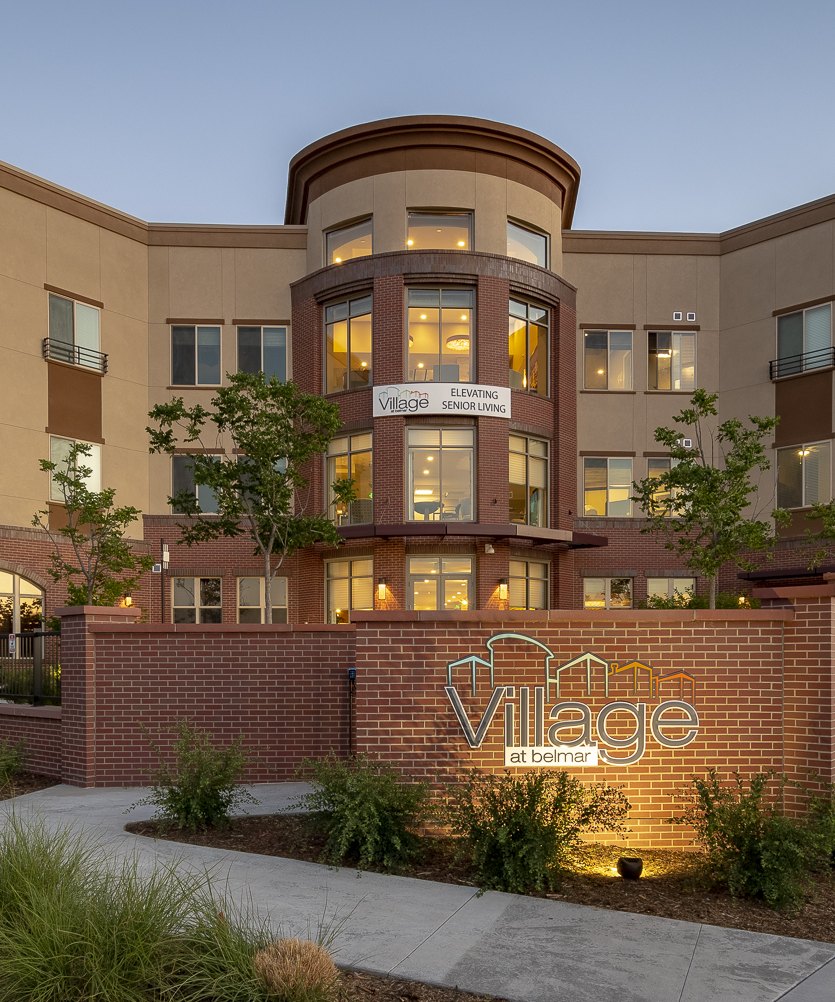
Village at Belmar, Lakewood
- The project
- 155 units. 60 Independent Living residences across fifteen small buildings, 71 Assisted Living, 24 Memory Care.
- What it took
- Two years to earn approval from a neighborhood association that had turned down every proposal brought to it for forty years.
- What happened
- The community filled without drawing on its operating deficit reserve, which is rare, and it was recapitalized in 2026 with Ascent retained as operator. Occupancy runs in the mid 90s today.
Who we are looking for
The partnerships that work best start early.
Some of our partners are new to senior living and want an operator who has run buildings rather than a consultant who has studied them. Others have built in the sector before and want a different operating partner than the one they used last time. Both work. What they have in common is a developer who is strong in a market, has a site or a thesis, and brings the operator in while the plan can still move.
The best first conversation is a specific one. Bring us the site, the submarket, or the thesis, even if it is early. Especially if it is early.

One of the 150 largest senior living providers in the country.
Argentum 2026 Largest Providers Report, ranked 126th.